

Lighting and Eye Health Starts with Proper Lighting
Light is essential for human vision, and its quality, intensity, color and timing all influence on how the eyes function throughout the day. From offices and schools to homes and public spaces, lighting and eye health are the two factors to be considered together when designing a comfortable environment. A scientific approach helps users choose lighting that supports visibility, reduces eye strain and improves daily activities. The following article explains how light influences on the eyes and what are the appropriate lighting solutions to be applied in life.
Human vision depends on light. When light enters the eye, it passes through the cornea and lens before reaching the retina, where photoreceptor cells convert light signals into visual information. The brain then processes these signals into images, colors, depth and movement.
However, eyes do not respond only to whether a space is bright or dark. They also respond to contrast, glare, flicker, color temperature and light distribution. A room with strong glare can feel uncomfortable even if it is technically bright enough. In contrast, a well-designed lighting place provides more safety and comfort to reading, working, cooking or moving around.
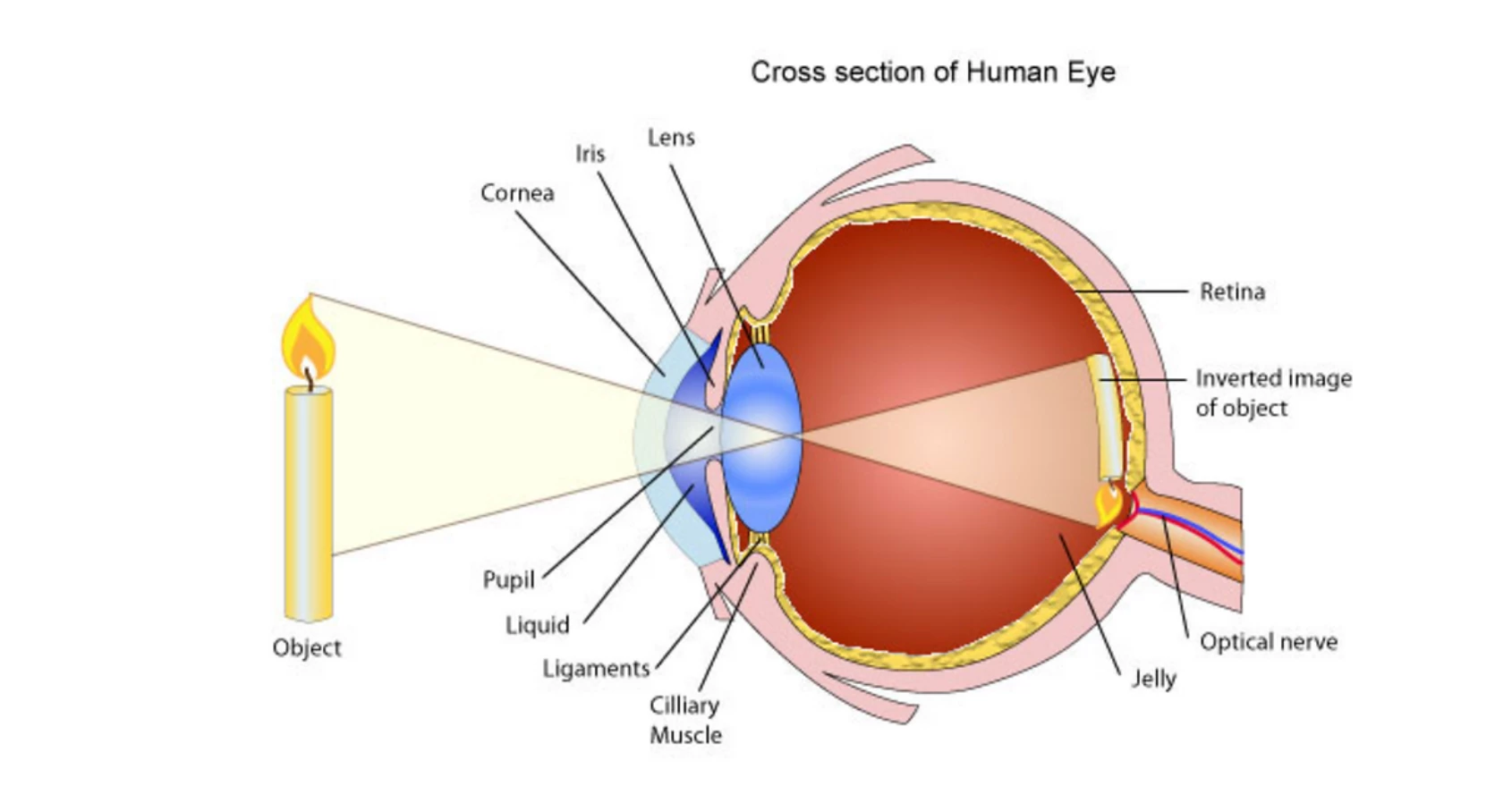 The photoreception mechanism allows the human eye to detect varying levels of light.
Eye comfort
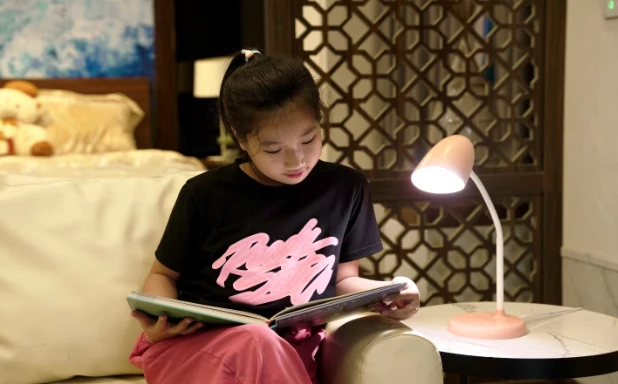
One of the most common issues in daily lighting is unsuitable brightness. Light that is too dim forces the eyes to work harder to identify details, especially during reading or close-up work. Over time, this may lead to tired eyes, reduce concentration, and discomfort.
Too bright light can also create problems. Direct glare from exposed lamps, reflective surfaces, or poorly positioned luminaires may cause squinting and visual fatigue. This is especially important in offices, classrooms, hospitals, retail spaces, and production areas where people need to focus for long periods.
For better lighting and eye health, brightness should match the task. Reading, studying, and detailed work usually require higher illumination than relaxing, watching television, or walking in a corridor. The goal is not simply to make a space brighter, but to make the light more suitable for human vision.
 Proper brightness helps reduce visual fatigue during daily tasks.
Color temperature and visual Perception
Color temperature describes whether light appears warm, neutral or cool. Warm white light often creates a relaxing atmosphere, while neutral or cool white light can support alertness and concentration. This is why homes, hotels, offices, factories, and commercial spaces often use different lighting tones for different purposes.
For example, warm light may be suitable for bedrooms and living areas because it feels softer and more comfortable in the evening. Neutral white light is often used in kitchens, workspaces, and classrooms because it helps users see objects and colors clearly.
In work environments, appropriate color temperature can support productivity without creating unnecessary visual stress.
Good lighting and eye health therefore requires attention to both brightness and color appearance. A lighting system should support the activity taking place in the space, not create a single lighting condition for every situation.
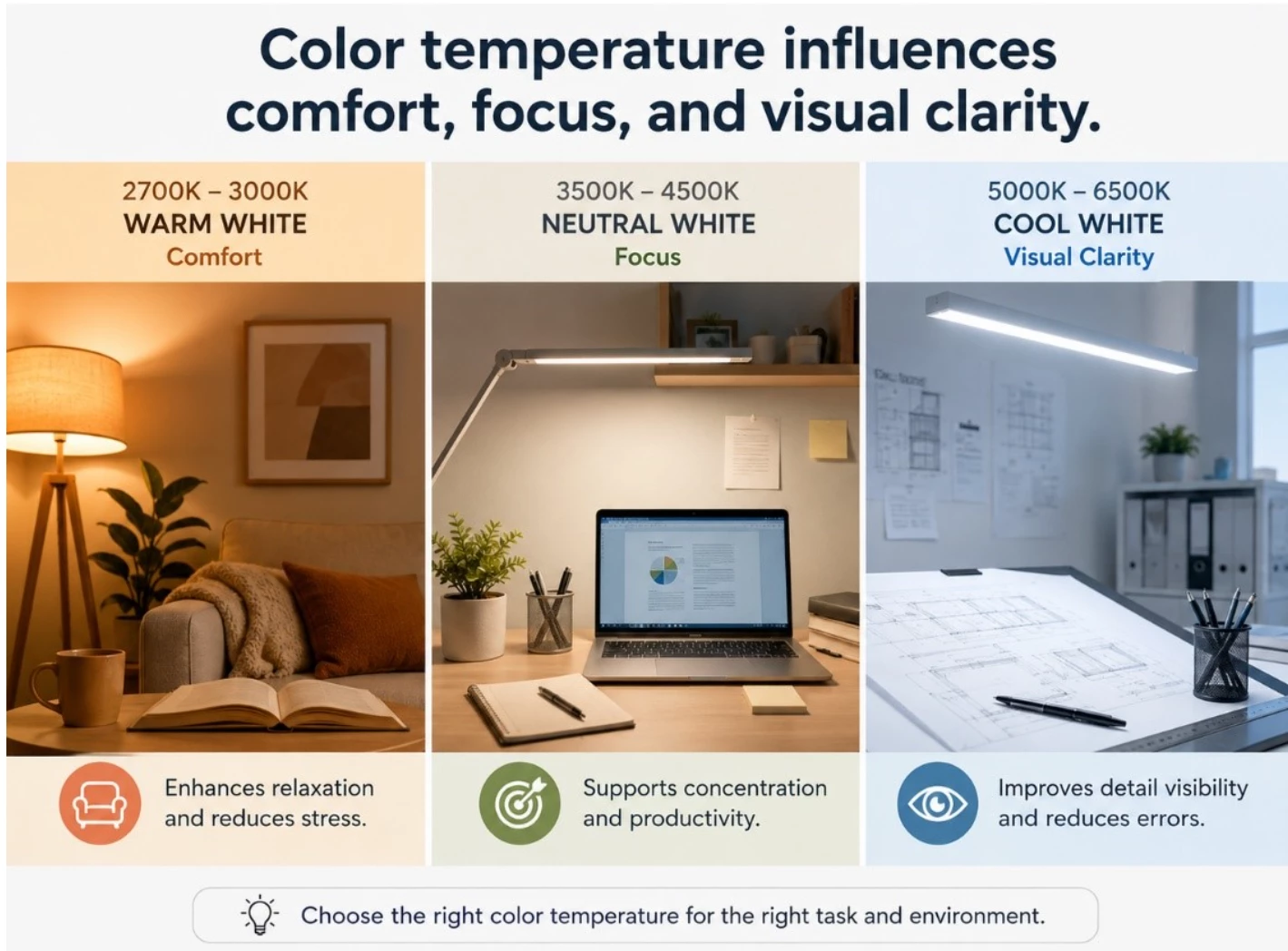 Color temperature influences on comfort, focus and visual clarity.
Flicker and blue Light
Flicker is another factor that affects visual comfort. Some low-quality lighting products may generate unstable output, which can cause discomfort for sensitive users. Even when flicker is not visible, it may still make people tired during long exposure. Stable light output is important for offices, schools, homes and
Blue light is also widely discussed in relation to vision and sleep. Blue-rich light during daytime can support alertness, but excessive exposure to bright, cool light in the evening may affect the body’s natural sleep rhythm. This does not mean all blue light is harmful. Instead, it means light timing, intensity, and application should be considered carefully.
In practical terms, users can apply brighter and cooler light for active daytime tasks, then shift to warmer and softer light in the evening. This balanced approach supports both visibility and comfort.
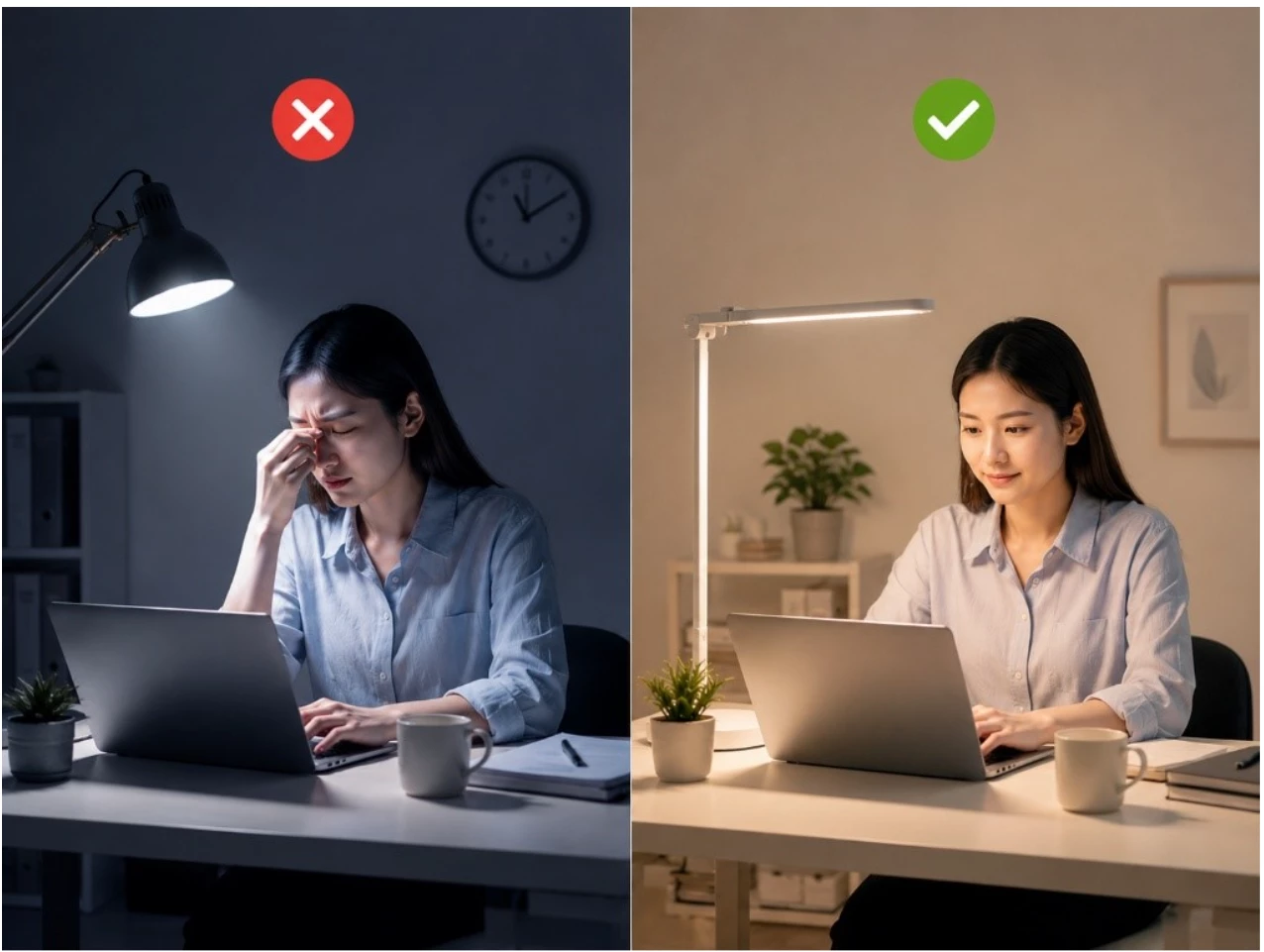
 Stable and suitable light helps support visual comfort over time.
Practical applications
Modern lighting design connects science with everyday use. In homes, layered lighting can combine general lighting, task lighting, and accent lighting to support different activities.
In offices, glare control and balanced illumination help create a more comfortable working environment. In schools, suitable lighting can support reading, writing and attention. In outdoor spaces, well-directed lighting improves visibility while reducing wasted light.
Rang Dong, Vietnam’s leading manufacturer of high-quality home appliances and smart lighting products, develops solutions for residential, commercial and public applications. In the context of lighting and eye health, suitable product selections should count in light output, color temperature, installation position, energy efficiency, and the needs of each space.
Lighting is not only a technical feature. It shapes how people see, feel, work and rest. When lighting is designed with human vision in mind, it can improve comfort and support healthier daily environments.
Should you have any questions or request a quotation of Rang Dong products, please send us an email to: export@rangdong.com.vn
Websites: en.rangdong.com.vn and vacuumflask.rangdong.com.vn